UVA vs UVB vs UVC: What’s the Difference and Why SPF Matters
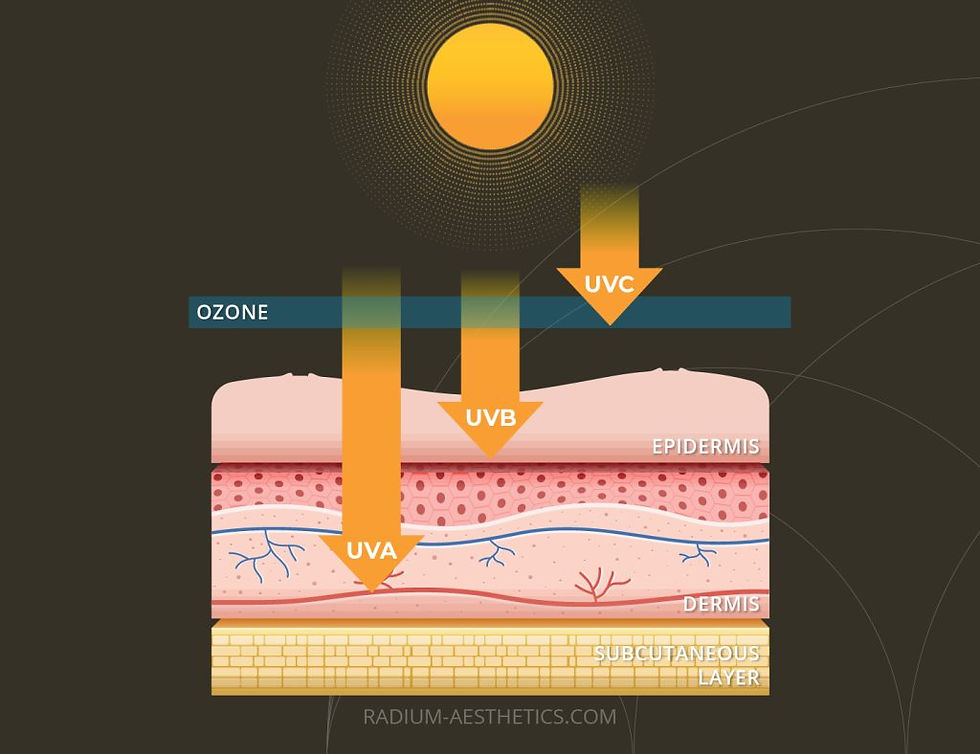
When it comes to sun protection, most people hear "UVA" and "UVB" on sunscreen labels-but few actually understand what they mean. Even fewer know what UVC is and why it matters.
Understanding these types of ultraviolet (UV) rays is essential for preventing premature aging, pigmentation, and long-term skin damage.
What Are UV Rays?
UV rays are a form of energy emitted by the sun. They are invisible to the eye but can penetrate the skin and cause damage at different levels depending on the type.
There are three main types:
UVA (aging rays)
UVB (burning rays)
UVC (filtered out of the atmosphere)
Each one affects the skin differently
What Is UVA? (Aging Rays)
UVA rays make up the majority of UV radiation that reaches the earth's surface. They penetrate deep into the skin, reaching the dermis where collagen and elastin are found.
Unlike UVB rays, UVA is present year-round, even on cloud days and through windows.
Effects of UVA:
Premature aging (fine lines and wrinkles)
Loss of collagen and elasticity
Skin laxity
Hyperpigmentation and dark spots
Long-term photoaging
UVA is often called the "silent ager" because damage builds over time without visible burning.
What Is UVB? (Burning Rays)
UVB rays affect the outer layers of the skin and are the primary cause of sunburn.
They are the strongest peak sunlight hours and vary by season and location.
Effects of UVB:
Sunburn
Redness and inflammation
DNA damage in skin cells
Increased risk of skin cancer
Pigmentation changes
While UVA causes long-term aging, UVB is responsible for more immediate visible damage.
What Is UVC?
UVC rays are the most dangerous type of ultraviolet radiation, but fortunately, they are completely absorbed by the earth's ozone layer and do not naturally reach the skin.
However, UVC can be found in artificial sources such as certain sterilizing lamps and industrial equipment.
Key takeaway:
UVC is not a daily skincare concern, but UVA and UVB absolutely are.
UVA vs UVB: What's the Real Difference?
The simplest way to understand it:
UVA = aging (deep skin damage over time)
UVB = burning (surface-level damage and sunburn)
Both contribute to:
skin cancer risk
pigmentation issues
premature aging
This is why broad-spectrum sunscreen is essential
Why Sunscreen Matters Every Single Day
Even without direct sun exposure, UVA rays can penetrate:
windows
clouds
indirect daylight
This means your skin is exposed daily-even indoors or during winter.
A broad-spectrum SPF helps protect against both UVA and UVB damage, reducing
premature aging
pigmentation
inflammation
long-term skin damage
How This Connects to Clinical Skincare
At Simply Beautiful, sun protection is a foundational part of every Advanced Clinical Facial and skin treatment plan.
UV exposure is one of the leading contributors to:
pigmentation
fine lines and wrinkles
uneven texture
collagen breakdown
That's why SPF and aftercare education are always emphasized following treatments such as:
laser treatments
microneedling
exfoliating and resurfacing facials
acne and pigmentation protocols
Protecting the skin ensures your results continue to improve long after your appointment.
Professional Skincare + SPF = Long-Term Results
Medical-grade skincare works best when combined with consistent sun protection.
At Simply Beautiful, we incorporate professional skincare systems such as Hydrinity, Neocutis, Anfisa, Glytone, and Revision to support hydration, barrier repair, and skin healing-alongside daily SPF use.
Without sun protection, even the most advanced skincare treatments cannot maintain optimal long-term results.
Final Thoughts
Understanding UVA, UVB, and UVC helps you take control of your health and make informed decisions about protection and prevention.
The key takeaway is simple
UVA = aging
UVB = burning
UVC = not a daily concern
But both UVA and UVB protection are essential every single day of the year.
Want to protect and improve your skin long-term?
Both an Advanced Clinical Facial at Simply Beautiful for a customized treatment plan designed to support healthy, resilient, and radiant skin.


Comments